



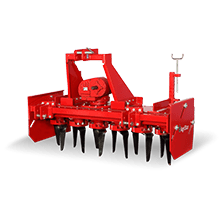
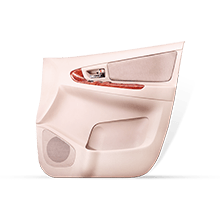


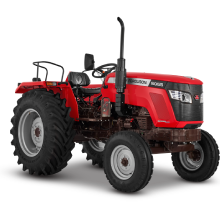
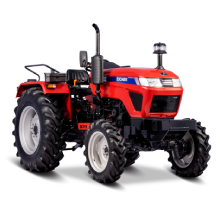
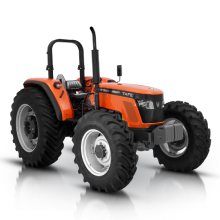
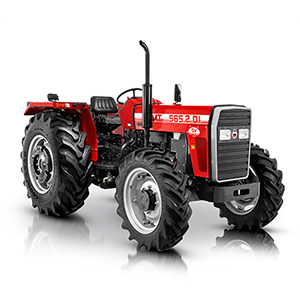
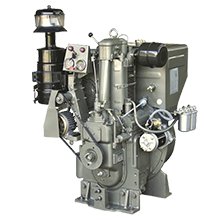
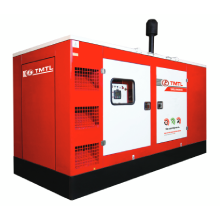
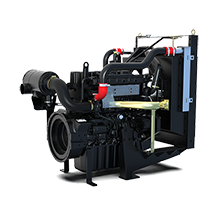
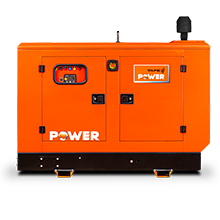
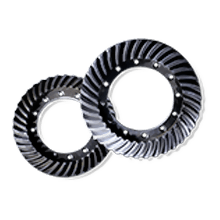





These services embody the accumulated knowledge in engineering, developed through over 40 person-years of design and production for some of the most demanding OEMs in the nation. The focus lies in injection moulded engineering plastics and pressure die castings, where knowledge-based design validations have been successfully verified through final production in several projects.
Efficiency Considerations in Outsourcing
Today, EPD follows a predominantly off-site outsourced customer engagement model. This means we service our design requirements from our development centre in Bangalore, India. The outsourcing model offers certain economic advantages to customers. It also raises concerns of efficiency and control, brought about by geographical and time separations.
Discrete Engineering Services
- Multiple vendors for multiple functions
- A convoluted process
- A one-to-many model loaded with multiple one-to-one interaction costs
- Cycle-of-validation spans across many service vendors
- Complicated further by separations in time and geography
EPD's Approach
- Integrated Outsourced Engineering
- Fewer convolutions
- Fewer one-to-one interaction costs
- Cycle-of-validation cuts fewer boundaries
- Customized Internet-based project collaboration tools
Ultimately, Go further, in less time
CAD
- Surface, solid and assembly modeling
- Feature-based design
- Parametric and Variational design
- Dimensioning and tolerancing
- Generative and interactive drafting
- IGES and STEP interfacing
- Applications: Pro-E, IDEAS, ICEM-Surf
CAM
- Multi-axis generative CNC machining
- Rough-cutting
- Post-processing
- Applications: Advanced-NC, Pro-NC
CAE
- Plastic and metal-flow simulations
- Applications: Moldflow, Pro-Mold
Design-for-Manufacturability (DFM)
- Validation of product geometry with material properties
- Flow-facilitating product geometry designs
- Optimum choice of raw materials, additives, fillers, oxidizers, UV stabilizers to improve product functionality
- Validation of material flow across tooling constraints
- Optimizing design processes toward "zero defect" quality standards
- Optimizing design processes toward a target product cost with an in-built continuous improvement program
- Tooling designs optimized across target-cost, cycle-times, cutting-efficiency and finish-quality
Reverse-Engineering
- Point-sampling models/masters/products using high-speed contact sensors in a Retroscan system
- Interfacing scanned data to advanced software applications for creating "A"-class surfaces
- Creation of 3D product geometry
- CAE analysis
- DFM considerations on scanned geometry
Prototyping
- Prototypes with soft materials (graphite, aluminum, hylam) using high-speed machining
- Stereo-lithography/FDM (outsourced)